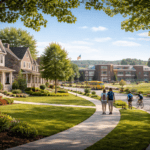
If you are searching for 55+ communities in the Charlotte area, you are far from alone. Active adult communities have become a growing part of the local housing conversation as more buyers look for lower-maintenance homes, modern floorplans, social amenities, and neighborhoods designed around convenience and lifestyle. That interest lines up with larger demographic trends. Nationally, the U.S. population age 65 and older reached 61.2 million in 2024, and North Carolina’s older adult population is expected to keep rising in the years ahead. State projections show 20% of North Carolina residents will be 65 or older by 2030, and Mecklenburg and Union Counties in NC and Charlotte are SC counties are among the counties expected to see especially strong growth in older residents.
For many buyers, the appeal of a 55+ community is not simply age. It is the chance to simplify daily living without giving up quality, comfort, or location. Some buyers want a ranch-style home with the primary suite on the main floor. Others want a neighborhood with walking trails, fitness options, pickleball, social events, or a clubhouse atmosphere. Some simply want a newer home with less exterior upkeep and fewer stairs. Around Charlotte, that can mean options in both North Carolina and nearby South Carolina markets, depending on the builder, lifestyle focus, and price point.
If you are just starting your search, it can also help to explore nearby new construction communities and review our guide on whether to use an agent for new construction.
Thinking about a move to a 55+ community?
We can help you compare active adult communities, builders, amenities, and locations across the Charlotte area.
Explore Your OptionsWhy 55+ Communities Are Getting More Attention
The growth in active adult housing is tied to real demographic changes. The Census Bureau reported that the U.S. population age 65 and older rose by 3.1% from 2023 to 2024, while the under-18 population declined slightly. In North Carolina, state demographic reporting shows the older population has been expanding steadily and is expected to represent a much larger share of the state in the years ahead. Mecklenburg County is one of the counties projected to see its 65+ population roughly double over the longer term.
For buyers in the Charlotte region, that matters because it helps explain why more builders have introduced or expanded active adult offerings. The Charlotte region is also expected to continue outpacing the nation in population growth over the next several years, which keeps demand elevated across multiple housing categories, including age-targeted communities.
What Is a 55+ Community?
A 55+ community, often called an active adult community, is a neighborhood intended primarily for older residents. Under federal housing law, a community generally qualifies as housing for older persons when at least 80% of occupied units have at least one occupant age 55 or older, the community publishes and follows policies showing that intent, and it complies with age-verification requirements.
That is an important point because many buyers assume every resident must be at least 55. In reality, the law does not require every single resident to be over 55. The exact occupancy rules, guest policies, and household restrictions can vary by neighborhood and HOA documents, which is why buyers should always review the governing documents before purchasing.
Pros of Buying in a 55+ Community
Lifestyle-focused amenities
One major draw is the community lifestyle. Many 55+ neighborhoods are designed around features that go beyond the house itself, such as clubhouses, fitness spaces, walking trails, pickleball, pools, social clubs, and gathering areas. For buyers who want more connection and activity built into the neighborhood, this can be a major advantage.
Lower-maintenance living
A lot of active adult buyers are looking to simplify. Depending on the community, the HOA may handle some combination of lawn care, exterior maintenance, common area upkeep, or amenities. That can be especially appealing for buyers who want less home maintenance and more flexibility for travel, hobbies, or time with family.
Floorplans that fit the next stage of life
Many 55+ communities lean heavily into practical design. Buyers often find ranch plans, main-level living, open-concept layouts, flex spaces, larger primary suites, covered outdoor living, and features that may feel more comfortable long term than older housing stock.
Sense of community
For some buyers, this is just as important as the home itself. Active adult neighborhoods often appeal to people who want neighbors in a similar life stage, organized activities, and a stronger social component than they may find in a typical mixed-age subdivision.
Newer construction options
Many Charlotte-area buyers considering 55+ housing are moving from older homes. New construction can offer updated layouts, improved energy efficiency, modern finishes, and fewer near-term repair concerns than an older resale property.
Not sure whether a 55+ community is the right fit?
Get help comparing active adult communities with traditional new construction neighborhoods in the Charlotte area.
Ask About 55+ CommunitiesCons of Buying in a 55+ Community
HOA fees can be higher
The lifestyle and maintenance benefits often come with HOA dues. Buyers should look closely at what those dues actually cover, because the amount alone does not tell the full story.
Community rules matter
Age-targeted communities often come with more detailed rules around occupancy, guests, leasing, exterior changes, and use of amenities. Some buyers appreciate that structure. Others may find it restrictive.
Not every 55+ community feels the same
Some are highly social and amenity-driven. Others are quieter and more low-key. Some focus heavily on detached ranch homes, while others may include smaller footprints or paired-home concepts. Buyers should avoid assuming every active adult community offers the same experience.
Resale is more specialized
A 55+ home can absolutely have resale appeal, but the buyer pool is narrower than for a non-age-restricted neighborhood. That does not automatically make resale harder, but it does make it more specialized.
It may not fit every family situation
If you expect long-term younger occupants, multigenerational living, or frequent extended stays from younger family members, you need to study the HOA and occupancy rules closely.
What Is Usually Included in a 55+ Community?
This varies by builder and neighborhood, but buyers often find:
- Ranch or main-level living floorplans
- Primary suite on the main floor
- Open-concept kitchens and living areas
- Flex rooms, studies, or bonus space
- Covered patios, courtyards, or outdoor living areas
- Lower-maintenance lots
- HOA-managed common spaces
- Clubhouse or social gathering areas
- Fitness amenities
- Walking trails
- Pool, pickleball, tennis, or recreation options
- Lifestyle programming, clubs, or events
In some communities, the appeal is strongly centered on lock-and-leave convenience. In others, the draw is the broader social and amenity package.
Can Someone Under 55 Live in a 55+ Community?
Sometimes, yes — but you should never assume the answer is the same from one community to the next.
Federal rules do not require every resident to be 55 or older. The key standard is that at least 80% of occupied units must have at least one resident who is 55 or older, along with other compliance requirements. That means a spouse, partner, or another occupant may be under 55 in some cases. Guest policies may also allow temporary visits from children or grandchildren. However, each community can have its own rules on how long younger occupants may stay, whether permanent occupancy is allowed, and what restrictions apply.
The practical takeaway is simple: always review the actual HOA documents and community rules before buying. This is especially important if you are planning ahead for caregiving, family visits, or future living arrangements.
Things Buyers Should Consider Before Choosing a 55+ Community
Before buying in an active adult community, it helps to compare more than just price and floorplan.
Location and convenience
Think about how close the community is to the places you actually use, such as shopping, healthcare, golf, parks, churches, dining, entertainment, and family.
HOA structure
Review the dues, the services included, and the overall rules. A higher HOA fee may be worth it if it covers things you truly value.
Community personality
Some neighborhoods are very active and social. Others are quieter. Touring in person can tell you a lot that photos and listings will not.
Home design
Look beyond square footage. Main-level living, storage, guest space, outdoor living, bathroom layout, and future accessibility often matter more than raw size.
Builder reputation and product type
Different builders approach active adult housing differently. Some focus more on lifestyle amenities, others on low-maintenance design, and others on luxury finishes or paired-home concepts.
Resale position
Even if you plan to stay long term, it is worth considering how the home may appeal to future buyers within the active adult market.
Top 55+ Builders and Communities in the Charlotte Area
Browse some of the top builders and active adult communities currently featured on HomeBuildersCLT.com.
FAQs About 55+ Communities in the Charlotte Area
Do you have to be retired to live in a 55+ community?
No. Many residents are retired, but retirement itself is not the requirement. Age rules and occupancy policies matter more than employment status.
Do both owners have to be 55 or older?
Not always. Federal standards focus on occupancy thresholds and the presence of at least one 55+ occupant in enough occupied homes, but each community may have its own additional rules.
Can adult children or grandchildren stay in the home?
Often they can visit, but communities may limit how long younger guests can stay. The rules vary, so buyers should verify this with the HOA documents.
Are 55+ communities more expensive?
They can be, especially when amenities and HOA services are extensive. But value depends on what is included, the location, the builder, the lot, the home size, and the overall lifestyle package.
Are these communities only detached homes?
No. Some are single-family detached homes, while others may include courtyards, villas, paired homes, or other attached or semi-attached concepts.
Is a 55+ community a good fit if I travel frequently?
It can be. Buyers who want lower exterior maintenance and a more lock-and-leave setup often find these communities appealing.
Are 55+ communities all the same?
Not even close. The differences in location, fees, amenities, social activity, home design, and rules can be substantial from one neighborhood to another.
Not sure which county or school district fits best?
Compare communities across Mecklenburg, Union, Cabarrus, York, and other Charlotte-area counties.
Explore the SearchBrowse 55+ Communities in the Charlotte Area
Use the community search below to explore current active adult and 55+ communities around Charlotte by builder, location, and lifestyle.
Looking for the right fit? Browse 55+ communities in the Charlotte area by builder, area, and home style. Some communities focus on low-maintenance living, while others lean more heavily into amenities, social events, and active adult lifestyle features.
Final Thoughts
A 55+ community can be a great fit for the right buyer, but the best choice usually comes down to more than age. Buyers should weigh location, lifestyle, HOA structure, amenities, home design, and long-term fit. Some want a highly active neighborhood with amenities and events. Others want a simpler, lower-maintenance home near family and everyday conveniences.
The Charlotte area offers a growing number of active adult options, and there is real variety within the category. Taking the time to compare communities carefully can make a major difference in finding the right next move.
If you want help narrowing down the best fit, visit our contact page to start the conversation.
Have questions about age restrictions, community rules, or builder options?
Reach out for help comparing active adult communities around Charlotte.
Contact HomeBuildersCLT.comSources
- U.S. Department of Housing and Urban Development (HUD) — Fair Housing: Equal Opportunity for All
- U.S. Census Bureau — Older Adults Outnumber Children in 11 States and Nearly Half of U.S. Counties
- U.S. Census Bureau — Vintage 2024 Population Estimates by Age, Sex, Race and Hispanic Origin
- U.S. Census Bureau — An Aging Nation: U.S. Median Age Surpassed 39 in 2024
- North Carolina Office of State Budget and Management — North Carolina’s Older Adult Population to Almost Double in the Next 20 Years
- North Carolina Department of Health and Human Services — Data Dashboard Reveals Trends, Demographics, and Opportunities to Serve Older North Carolinians
- Electronic Code of Federal Regulations — 24 CFR Part 100 Subpart E — Housing for Older Persons