

Buying a new construction home is exciting, but it also comes with a very different timeline than buying a resale home. Instead of moving from contract to closing in just a few weeks, a new build usually unfolds over several months and includes multiple stages, decisions, inspections, and walkthroughs.
If you are considering a new construction home, it helps to know what happens from the moment you choose a community to the day you get the keys. Understanding the process upfront can help you plan better, ask smarter questions, and avoid surprises along the way.
In this guide, we walk through the new construction timeline step-by-step, including choosing a lot, signing the builder contract, inspections, warranty meetings, final walkthrough, and closing.
How Long Does New Construction Take?
The timeline depends on the builder, the community, the floor plan, weather, permits, labor, and whether the home is already underway when you go under contract. Some homes are sold before construction starts, while others are already framed or nearly complete.
National data cited by NAHB shows the average time to complete a single-family home in the U.S. was about 10.1 months in 2023, while homes built for sale averaged about 8.9 months. That does not mean every build takes that long, but it gives buyers a realistic starting point when planning for a new construction purchase.
Why the Timeline Can Vary
Not every builder works the same way. Production builders usually offer a more standardized process with a limited menu of floor plans, options, and design selections. Semi-custom and custom builders often provide more flexibility, but that usually means more decisions and, in many cases, a longer build schedule.
The timeline can also change based on whether you are buying:
- a to-be-built home on a vacant lot
- a home that has already started construction
- a quick move-in home that is close to completion
That is why two “new construction” homes in the same area can have very different timelines.
Need Help Comparing New Construction Communities?
Buying new construction comes with a different timeline, contract process, and inspection schedule than resale. If you want help comparing builders, communities, lot options, and available homes, we would be glad to help.
Connect With HomeBuildersCLT.com Before Visiting Communities
One of the smartest first steps in the new construction process is connecting with the HomeBuildersCLT.com team before you start visiting builder communities. Many buyers assume they can visit first and figure out representation later, but that can create problems depending on the builder’s registration rules and policies.
Builder sales representatives work for the builder, not for the buyer. Their job is to represent the builder’s interests, the builder’s contract, and the builder’s sales process. Having your own buyer representation in place early gives you someone focused on your side of the transaction from the start.
In many new construction communities, builders commonly offer buyer agent commissions and are used to working with represented buyers. In fact, many builders have processes built around agent registration and expect buyers to either come in with representation or make that decision early. That is one reason it is smart to connect before your first visit rather than after you have already started touring communities on your own.
Starting with buyer representation can help with:
- comparing builders and communities
- understanding builder differences
- reviewing lot options and lot premiums
- evaluating included features versus upgrades
- identifying questions to ask before signing anything
- understanding incentives, contract terms, and timelines
- having guidance through inspections, walkthroughs, and closing
This can be especially helpful if you are comparing several builders, trying to understand the difference between quick move-in and to-be-built homes, or sorting through upgrade pricing and contract terms. A little preparation on the front end can make the entire process smoother.
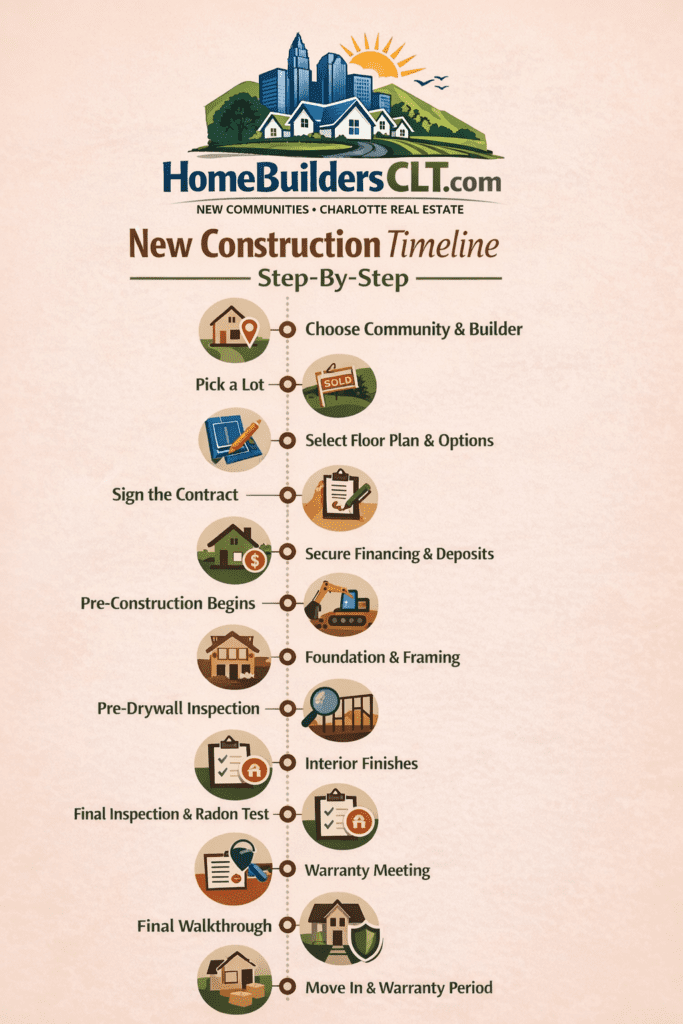
Step 1: Choose the Right Community and Builder
The process usually starts with comparing communities, builders, home styles, and price points. At this stage, buyers should look beyond the model home and ask practical questions about the overall process.
Some of the most important things to compare include:
- location and commute
- HOA dues and community rules
- included features versus upgrades
- lot premiums
- available floor plans
- builder incentives
- estimated build time
- warranty coverage
- whether the builder allows outside inspections
This is also the time to think about how long you are comfortable waiting. A quick move-in home may offer a faster path to closing, while a from-scratch build may give you more choices.
Step 2: Picking a Lot
Choosing the lot is one of the biggest decisions you will make because it affects both your day-to-day experience and long-term resale appeal.
The lot can influence:
- privacy
- backyard space
- slope and drainage
- distance from neighboring homes
- traffic exposure
- future construction nearby
- sun exposure
- overall price
Some buyers focus heavily on the floor plan and overlook the homesite. In reality, the lot can be just as important as the house itself. A premium lot may cost more upfront, but it can offer a better view, more usable outdoor space, or more privacy.
When touring lots, ask whether future phases will be built nearby, whether there are lot premiums, and whether there are any limitations on fences, patios, or yard use.
Step 3: Choose the Floor Plan and Review Builder Options
Once you choose a lot, the next step is selecting the floor plan, elevation, and structural options. Depending on the builder, this may include decisions like adding a guest suite, extended patio, extra bedroom, office, bonus room, or garage changes.
This is where builder differences become more noticeable. Some builders keep the process simple and offer only a few structural choices. Others allow much more customization.
It is also important to review what comes standard and what counts as an upgrade. Two builders may have similar pricing on paper, but one may include more features in the base price.
Step 4: Sign the Contract
The contract process for new construction is different from resale. In many cases, the builder uses its own contract rather than the standard local purchase agreement.
The contract usually covers:
- base price
- lot premium
- structural options
- deposits
- financing deadlines
- estimated completion timing
- upgrade policies
- builder allowances for delays or substitutions
- preferred lender or closing attorney incentives
Before signing, buyers should understand what is included, what deadlines apply, and what decisions still need to be made after contract. It is also smart to ask what happens if there are construction delays, material changes, or price changes tied to upgrades.
Step 5: Financing and Deposit Timeline
After contract, buyers usually complete the mortgage process with either the builder’s preferred lender or a lender of their choice. Some builders offer closing cost incentives if you use their preferred lender, so that is worth comparing carefully.
During the build, buyers should try to keep their financial picture stable. Big purchases, job changes, new debt, or unusual bank activity can create issues later when the lender updates documents before closing.
As closing gets closer, lenders are required to provide the Closing Disclosure at least three business days before closing, giving buyers time to review final loan terms and costs before signing.
Step 6: Pre-Construction and Build Start
Once the contract is signed, there may still be a wait before visible construction begins. That delay can come from permitting, lot prep, utility work, engineering approvals, or the builder’s construction schedule.
This part of the timeline can feel slow, especially for buyers who are eager to see progress. Once the home starts, construction usually moves through a series of major milestones rather than a smooth week-by-week schedule.
Step 7: Foundation, Framing, and Rough-Ins
Early construction often includes:
- site preparation
- foundation work
- framing
- roof installation
- windows and doors
- rough plumbing
- rough electrical
- rough HVAC
This is one of the most important stages in the entire process because the house layout becomes visible and many of the major systems are installed before the walls are closed up.
Step 8: Pre-Drywall Walk and Inspection
Before drywall goes in, many buyers schedule a pre-drywall inspection with an independent home inspector. This can be one of the best chances to catch issues while framing and rough systems are still visible.
A pre-drywall inspection may help identify concerns with framing, plumbing, electrical, HVAC routing, or other visible installation issues. Even though the builder and municipality will have their own inspections, that does not replace the buyer’s option to hire an independent inspector.
HUD states that an appraisal is not a guarantee that a property is free from defects and that buyers should secure their own home inspections through a qualified inspector. HUD also notes that an appraisal does not replace a home inspection.
If you are planning to do a pre-drywall inspection, ask the builder early about their policy, notice requirements, and access rules.
Step 9: Drywall, Interior Finishes, and Final Construction
After the pre-drywall stage, the home starts to come together quickly. This part of the timeline often includes:
- insulation
- drywall
- cabinets
- trim
- paint
- flooring
- countertops
- tile
- lighting
- plumbing fixtures
- appliances
- exterior finishes
- driveway and flatwork
This is usually when the house feels much more real to buyers. It is also the point where finish details matter, since issues with tile, trim, cabinets, flooring, or paint become easier to spot.
Step 10: Final Inspection and Radon Testing
Before closing, many buyers schedule a final independent home inspection. This gives you another chance to identify incomplete items, visible defects, function issues, or safety concerns before the transaction is complete.
Some buyers also choose to order radon testing, depending on the home, location, and comfort level. HUD’s consumer information for FHA borrowers specifically notes that the EPA and Surgeon General recommend that all houses be tested for radon.
While every buyer will make their own decision, inspections and testing are worth thinking through well before closing week.
Step 11: Warranty Meeting and Builder Orientation
Many builders schedule a homeowner orientation or warranty meeting before closing. This meeting often covers basic home maintenance, system shutoffs, HVAC filters, appliance operation, warranty procedures, and service request steps.
This is a good time to ask:
- how warranty claims are submitted
- what is covered
- what is considered normal settling
- whether there is an 11-month or one-year warranty review
- how manufacturer warranties differ from builder coverage
HUD’s Warranty of Completion of Construction form states that the warrantor must remedy defects in equipment, materials, or workmanship covered by the warranty terms.
Step 12: Final Walkthrough
The final walkthrough is your last major checkpoint before closing. This is when buyers should slow down and look carefully at the home’s condition, finishes, installed items, and overall completeness.
During the final walkthrough, buyers often check:
- paint and drywall touch-ups
- cabinet and drawer alignment
- scratches or chips
- flooring condition
- plumbing fixtures
- outlet and switch function
- windows and doors
- appliance installation
- exterior grading and cleanup
- unfinished or missing items
Bring a checklist and take notes. Small issues are common, but this is the best time to make sure they are documented.
Step 13: Closing Day
Closing is when ownership officially transfers and the buyer signs final loan and title documents.
Before closing, buyers should review the Closing Disclosure carefully to confirm cash to close, loan costs, interest rate, and credits or incentives. Federal rules require that buyers receive the Closing Disclosure at least three business days before closing.
Closing may be handled by a closing attorney, escrow company, or title company depending on the local market.
Step 14: Move-In and the First-Year Warranty Period
The process does not really end when you get the keys. The first year of ownership is when many buyers learn how the home performs through changing temperatures, daily use, and seasonal settling.
It is smart to keep a folder with:
- warranty documents
- inspection reports
- appliance information
- paint colors and finish details
- service request contacts
- photos of issues that come up after move-in
If the builder offers a scheduled warranty review later in the first year, keep a running list of items so you are prepared.
Keep Financing on Track During the Build
Once you go under contract, your lender’s work is not really done. During the build, buyers should stay in communication with their loan officer and be prepared to update pay stubs, bank statements, and other documents as closing gets closer. Because many new construction timelines stretch over several months, lenders often need refreshed documentation before final approval.
To help keep financing on track, buyers should try to avoid major financial changes during the build, including:
- opening new credit accounts
- financing furniture, appliances, or vehicles before closing
- making unusually large deposits without documentation
- changing jobs without first talking with the lender
- missing payments or increasing credit card balances
It is also smart to ask early about rate lock options, extension costs if the build is delayed, and when the lender expects to begin final underwriting updates before closing.
And a short utilities section like this near closing:
Prepare for Utilities, Insurance, and Move-In
As closing gets closer, buyers should also start preparing for the practical side of move-in. That usually includes setting up homeowners insurance, confirming utility providers, and planning for service start dates.
Depending on the area and provider, buyers may need to arrange:
- power
- water and sewer
- natural gas
- trash and recycling
- internet and cable
It is a good idea to ask the builder or closing team when utilities should be transferred or activated, especially if certain services need to be on for walkthroughs, final checks, or move-in day. Buyers should also confirm mailbox details, community access information, HOA contacts, and any instructions for warranties, appliance registration, or service requests after closing.
Major New Construction Milestones at a Glance
Here is a simplified version of the process most buyers go through:
Before Contract
- compare builders and communities
- tour model homes
- review included features
- choose a lot and floor plan
After Contract
- submit deposits
- finalize financing
- make structural selections
- wait for lot release, permits, or scheduling
Early Construction
- site prep
- foundation
- framing
- rough plumbing, electrical, and HVAC
Mid-Construction
- pre-drywall walkthrough
- pre-drywall inspection
- insulation and drywall
- interior selections and finish work
Final Stages
- final inspection
- warranty meeting
- final walkthrough
- closing disclosure review
- closing day
- move-in
Common Reasons the Timeline Gets Delayed
Even well-run builds can hit delays. Some of the most common include:
- permit delays
- weather
- labor shortages
- utility issues
- backordered materials
- change orders
- inspection scheduling
- lender delays near closing
That is one reason builder contracts often use estimated completion dates rather than fixed dates.
Explore Communities, Compare Builders, and Get Local Guidance
Browse new construction communities, compare Charlotte-area builders, explore helpful guides, and reach out for local help with your home search.
Final Thoughts
Buying a new construction home can be a great way to get a layout, location, and finishes that fit your needs. But the process works best when buyers understand the timeline from the start.
From choosing the lot and signing the contract to inspections, walkthroughs, warranty meetings, and closing, each step matters. The more you know before you begin, the easier it is to make confident decisions during the build.
If you are comparing builders or communities, having someone guide you through the process can make a big difference, especially when it comes to timing, upgrades, inspections, and contract questions.
Sources
- National Association of Home Builders (NAHB) – Single-family build time data
- NAHB Eye on Housing – Single-family build time continues to trend upward
- Consumer Financial Protection Bureau – When do I get a Closing Disclosure?
- Consumer Financial Protection Bureau – Closing Disclosure explainer
- HUD – FHA appraisal guidance and inspection clarification
- HUD – For Your Protection: Get a Home Inspection
- HUD – Warranty of Completion of Construction
Stay Updated and Get Expert Help With Your New Home Search
Sign up to receive updates on Charlotte-area communities, builders, and market trends, and let us know if you’d like to be contacted by a real estate professional for personalized guidance.