
Buying a new construction home is exciting, but for many buyers, one of the most important parts of the process comes after the contract is signed: the builder design center.
This is where your home starts to feel personal. Instead of just choosing a floor plan and lot, you may be selecting cabinets, countertops, flooring, tile, lighting, plumbing fixtures, paint colors, trim details, and structural or tech upgrades. Some builders offer a full in-person design studio experience, while others use a more limited menu of packages or online selections. Either way, the design center is where a lot of your final choices and costs come into focus. Builders vary widely in how much personalization they allow, and some specifically note that options and availability can differ by community, plan, and construction stage.
The biggest mistake buyers make is assuming they will sort all of this out later. In reality, the smartest time to ask design-center questions is before you sign the contract. That includes understanding what is standard, what costs extra, what upgrades may require additional deposits, what deadlines apply, and whether later changes are allowed at all. Builders can impose construction cut-off deadlines, and some options may no longer be available once those deadlines pass.
What is a builder design center?
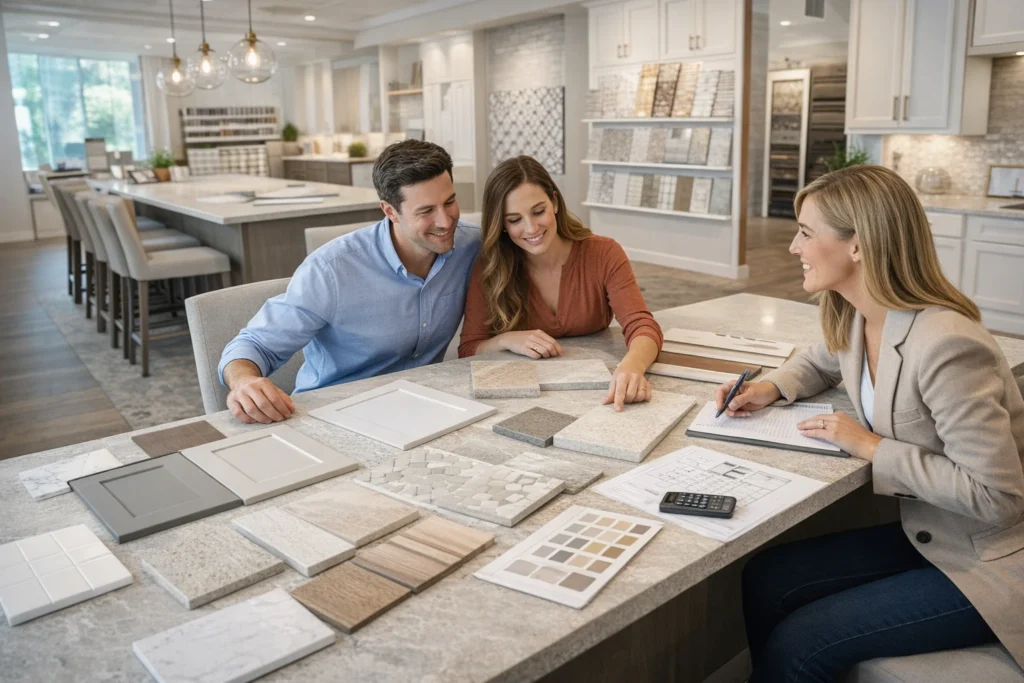
A builder design center is the part of the new construction process where buyers personalize the home’s finishes and, in some cases, select structural options or technology add-ons. Depending on the builder, you may attend one appointment or several. Some builders describe a sequence of browse, selection, and final appointments, while others have one more consolidated meeting.
This process can include choices such as kitchen and bath cabinets, countertops, backsplash materials, flooring, carpet, shower tile, lighting fixtures, hardware, paint colors, appliance packages, trim, and smart home or security-related features. Some builders also offer exterior elevations, room extensions, extra windows, covered patios, or alternate layouts, though structural options are usually subject to earlier deadlines than decorative finishes. Builders also commonly note that model homes and renderings may show features that are optional or not included in the base price.
What should you expect at the appointment?
Most buyers should expect a fast-moving appointment with a lot of decisions packed into a short window. Even when the environment feels relaxed, the financial impact can be significant. You may be shown standard selections first, followed by upgrade options in increasing price tiers. Some builders provide a professional design consultant, while others rely more on packaged options and community-specific menus. Toll Brothers, for example, describes a design studio process centered on personalization, while KB Home and Pulte both describe structured steps tied to the broader build timeline.
You should also expect deadlines. Builders often need final selections before certain construction milestones so ordering, scheduling, and installation stay on track. KB Home notes that buyers later confirm selected options at pre-drywall, while Pulte notes that design selections can lead to a change order that may even require updated lender approval if the purchase price increases.
That is why it helps to arrive with a plan. Know your budget, know your must-haves, and know where you are willing to leave the home more basic for now.
Talk to the builder before contract signing
Upgrades That Are Often Worth Stronger Consideration
The options that usually deserve the closest look are the ones that would be costly, disruptive, or difficult to change after the home is finished.
Natural Light + Layout
Additional windows, kitchen layout changes, island adjustments, and other structural decisions can have a lasting impact on how the home feels and functions.
Behind-the-Walls Items
Extra recessed lighting, prewiring, electrical additions, fireplace framing, and built-in rough-ins are often easier to handle during construction than after closing.
Hard-to-Redo Finishes
Bathroom shower upgrades and flooring in main living areas can be especially disruptive to replace later, which is why many buyers prioritize them upfront.
Outdoor Living Features
Covered patios and similar outdoor living options may be worth considering when they are integrated into the original design rather than added later.
This is one of the most important steps in the whole process.
Those conversations matter because many buyers are surprised by how quickly selections add up. In some cases, the design center budget can climb far beyond what they expected from touring a decorated model home. Builders also often reserve the right to reject requested changes, especially once construction has advanced.
This is also a good time to ask how your lender will handle upgrades. If your design selections increase the purchase price, your financing may need to be updated. Pulte specifically notes that once the change order for design selections is made, the lender may need to approve the new total purchase price.
How design center costs work
Builder design center costs are usually broken into three broad buckets: included features, optional upgrades, and structural changes. Included features are the standard finishes that come with the home at the advertised base price. Optional upgrades are the upgraded materials, fixtures, and features you can choose instead. Structural changes are items that change the layout, footprint, or framing and are often decided earlier in the process.
Some builders may require deposits tied to upgrade selections or change orders, and the contract or change-order paperwork will usually control those details. Policies vary by builder and community, so buyers should never assume deposits are refundable or that late changes will be allowed. Toll Brothers change-order paperwork publicly available online states that requested changes are subject to seller acceptance and that the seller reserves the right to reject them.
Buyers should also remember that design center spending is not the only extra cost in a new construction transaction. Builder fees, title-related costs, taxes, and other closing expenses can also affect your final cash needed. Pulte notes that new construction closing costs can include builder-related fees and that incentives tied to preferred lenders can sometimes help offset part of the buyer’s total cost.
Are later change requests allowed?
Sometimes, but not always.
Many buyers assume they can make a few final changes after thinking things over for a week or two. That may be possible early in the process, but it is often limited, fee-based, or cut off entirely once ordering and construction move ahead. Builders can have strict deadlines after which specific selections or upgrades are no longer available. KB Home explicitly notes that if construction cut-off deadlines have passed, certain options and upgrades may no longer be available.
Even when later changes are allowed, they may trigger revised paperwork, added costs, longer timelines, or financing updates. This is another reason buyers should try to make thoughtful decisions up front instead of assuming they can easily revise everything later.
Add-ons that can quietly increase the price
One reason design centers feel overwhelming is that many of the add-ons sound practical in the moment. Security systems, extra wiring, audio packages, upgraded lighting, appliance upgrades, enhanced trim, built-ins, luxury shower packages, and premium flooring can all seem relatively manageable one by one. But stacked together, they can have a major effect on your budget.
Security and smart-home features deserve special attention. Some are useful and convenient, but not every builder package is the best long-term value. Technology changes quickly, and buyers can often add certain cameras, monitoring devices, doorbells, or smart thermostats after closing with more flexibility. That does not mean builder-installed packages are always a bad choice. It means you should compare price, usefulness, and how hard the item would be to add later.
The same logic applies to decorative lighting, cabinet hardware, and some appliance upgrades. If the builder price feels steep and the item can be replaced easily after move-in, it may not be the best place to stretch your budget.
Upgrades worth thinking through carefully
Upgrades That Are Often Worth Stronger Consideration
The options that usually deserve the closest look are the ones that would be costly, disruptive, or difficult to change after the home is finished.
Natural Light + Layout
Additional windows, kitchen layout changes, island adjustments, and other structural decisions can have a lasting impact on how the home feels and functions.
Behind-the-Walls Items
Extra recessed lighting, prewiring, electrical additions, fireplace framing, and built-in rough-ins are often easier to handle during construction than after closing.
Hard-to-Redo Finishes
Bathroom shower upgrades and flooring in main living areas can be especially disruptive to replace later, which is why many buyers prioritize them upfront.
Outdoor Living Features
Covered patios and similar outdoor living options may be worth considering when they are integrated into the original design rather than added later.
The best upgrades are often the ones that are hard to do later, expensive to retrofit, or important to the way you will actually use the home.
These choices are not automatically right for every buyer. The point is to separate “hard to change later” items from “easy to swap later” items.
Upgrades that may be less valuable
Some upgrades are more about taste than long-term value. That does not mean you should avoid them. It just means you should be intentional.
This often includes very high-end decorative lighting, trend-heavy backsplash choices, premium cabinet hardware, highly customized paint colors, and tech packages that may be outdated faster than the rest of the home. Very specific luxury finishes can also narrow your appeal later if they are too personalized.
National Association of Realtors remodeling research regularly shows that buyer appeal and cost recovery vary widely by project, and not every dollar spent on aesthetics comes back dollar for dollar at resale. Broadly useful updates tend to perform differently from highly customized finishes.
For many buyers, a better strategy is to spend first on function, layout, and items that are costly to change later, then be more selective with purely decorative upgrades.
How to Think About Design Center Upgrades
Instead of treating every upgrade the same, break your decisions into practical buckets. That makes it much easier to protect your budget and focus on what really matters.
Do It Now
Focus first on items that are hard, messy, or expensive to change later, like structural options, added windows, major electrical upgrades, or shower layouts.
Price It Carefully
Some options sound small on paper but add up quickly when bundled together. Review the total cost of flooring, cabinets, tile, lighting, and appliance upgrades before saying yes across the board.
Compare Builder vs. After Closing
Ask yourself whether the item truly needs to be done through the builder or whether it could be installed later with more flexibility and possibly a better price.
Watch the Trendy Choices
Very personal finishes, bold design trends, and high-end decorative touches may fit your taste now but may not be the best place to put a large chunk of your budget.
Ask About Deadlines
Some selections must be finalized early. Once certain construction cutoffs pass, later change requests may not be possible or may come with added fees.
Protect Your Budget
Set a maximum spend before your appointment. Divide choices into must-have, nice-to-have, and skip-for-now so you do not make expensive decisions in the moment.
How to keep the design center from wrecking your budget
The easiest way to stay in control is to decide your budget before the appointment, not during it.
Start with a maximum number you are comfortable spending on upgrades. Then divide your priorities into three groups: must-have, nice-to-have, and skip-for-now. If you walk in without those categories, it is easy to say yes too many times.
It also helps to compare builder pricing against what certain items would cost after closing. That does not mean everything should wait. Some items absolutely make sense to do through the builder. But some are less expensive or more customizable once you own the home.
And if you are financing the home, remember that upgrades can affect both your loan amount and your cash needs. That is one more reason to speak with your lender early and understand how added selections may affect qualification, monthly payment, and closing costs.
Final takeaway
A builder design center can be one of the most exciting parts of buying new construction, but it can also become one of the most expensive if you walk in unprepared.
The smartest buyers ask questions before signing, understand what is standard versus upgraded, know the deadlines for selections, and go into the appointment with a realistic budget. They also focus first on changes that are difficult or expensive to make later and think carefully before overspending on items that are easier to update after move-in.
If you treat the design center like part of your overall homebuying strategy, not just a shopping trip, you will make better decisions and feel more confident in the final result.
At HomeBuildersCLT.com, we help buyers understand the real-world side of buying new construction in the Charlotte area, including the questions that come up before design selections, lender decisions, contract deadlines, and upgrade budgeting. If you are trying to figure out what is worth doing through the builder and what can wait until after closing, our team can help you think through the process before those design center decisions start getting expensive.
Need Help Making Sense of New Construction Choices?
Builder contracts, design center upgrades, lender questions, and construction timelines can all move quickly. HomeBuildersCLT.com helps Charlotte-area buyers understand the process, compare communities, and make more confident decisions before costs start stacking up.
Helpful Related Guides
Frequently Asked Questions
What is a builder design center?
A builder design center is where buyers select finishes, fixtures, and some upgrade options for a new construction home. Depending on the builder, it may include cabinets, countertops, flooring, tile, lighting, appliances, and certain structural or tech features.
Do upgrades at the design center cost extra?
Usually, yes. Some finishes and features are included in the base price, while others cost extra. Pricing, available options, and any required deposits vary by builder and community.
Can you change your design selections later?
Sometimes, but not always. Many builders have cut-off dates for selections, and later changes may be limited, subject to fees, or rejected once construction moves forward.
Should I ask about design center costs before signing the contract?
Yes. Buyers should ask what is included, what common upgrades cost, whether change orders require deposits, and what deadlines apply before signing. That can help avoid surprises later.
What upgrades are usually worth considering?
Many buyers prioritize upgrades that are difficult or expensive to change later, such as structural options, major electrical changes, additional windows, certain flooring upgrades, and bathroom or kitchen layout changes.
Are all builder tech and security packages worth it?
Not necessarily. Some are useful, but others may be easier or more cost-effective to add after closing. Buyers should compare convenience, price, and long-term value before choosing builder-installed packages.
Sources
- Pulte Homes: New Construction Homebuying Guide
- KB Home: How Long Is the Homebuilding Process?
- KB Home: New Homebuyer’s Checklist
- KB Home: Plan Page with Upgrade Cut-Off Disclosure
- Toll Brothers: Frequently Asked Questions
- Toll Brothers: Home Change Order Example
- Pulte Homes: How Closing Costs on New Construction Work
Stay Updated and Get Expert Help With Your New Home Search
Sign up to receive updates on Charlotte-area communities, builders, and market trends, and let us know if you’d like to be contacted by a real estate professional for personalized guidance.