
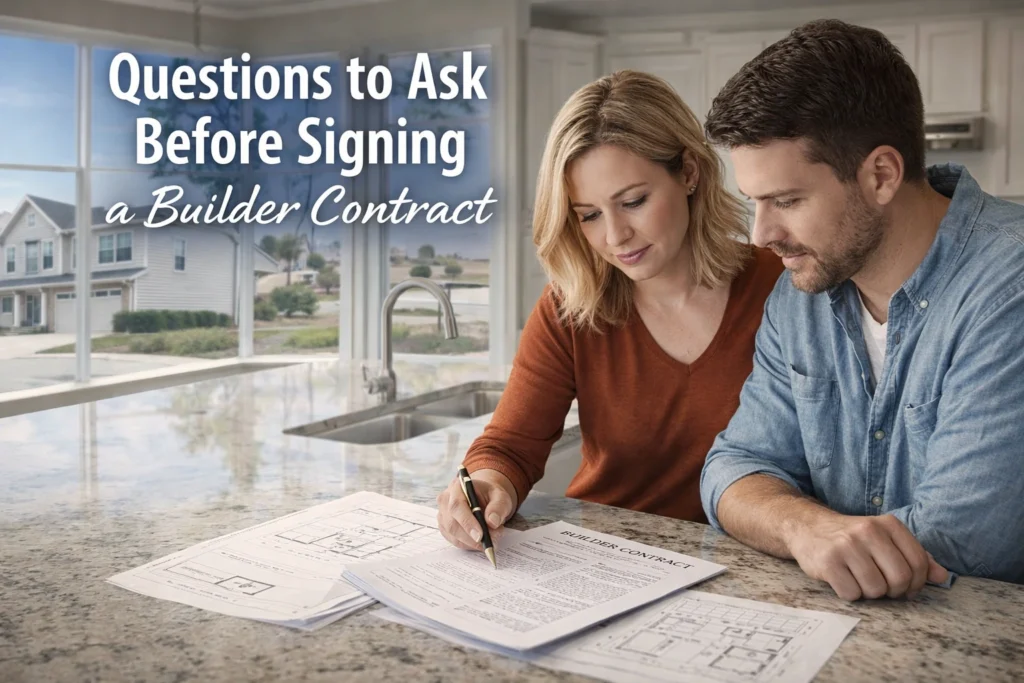

Signing a builder contract is a major step in the new construction process. It is also one of the easiest places for buyers to get caught up in excitement and move too quickly. A new home contract can cover pricing, structural options, design selections, allowances, financing deadlines, construction timing, warranty terms, and what happens if there are delays or changes along the way. NAHB advises buyers to ask detailed questions before committing, and the CFPB recommends carefully reviewing what you are signing and asking questions until you understand it.
That does not mean builder contracts are bad. It means they are important. Builders often use their own forms, and those agreements can be written very differently from a standard resale purchase contract. The goal is not to create conflict. The goal is to understand the deal clearly before you put down money and move forward.
Why this matters with new construction
With a resale home, the property already exists in finished form and the transaction is often more straightforward. With new construction, you may be signing before the home is complete, before all selections are finalized, or even before construction has started. That creates more moving parts around specifications, timing, allowances, and responsibility for changes. HUD materials for new construction financing and warranties reflect that builder identity, completion, and warranty documentation matter in these transactions.
Because of that, buyers should slow down and ask smart questions before signing.
Questions to ask before signing a builder contract
1. What exactly is included in the base price?
This is one of the biggest questions in any builder deal. Ask what is included in the advertised price and what is not. Model homes often show upgraded finishes, appliances, trim details, fixtures, flooring, and outdoor features that may not be part of the base package. NAHB specifically recommends asking detailed questions beyond just price and move-in timing.
Helpful follow-up questions:
- Which features in the model are standard?
- Which features are upgrades?
- Is lot premium included?
- Are appliances, landscaping, blinds, and garage door openers included?
- Are there allowances for lighting, flooring, or countertops?
A buyer should leave this conversation knowing what the contract price actually buys.
2. What are the upgrade and design-selection deadlines?
Many builder contracts separate the home price from later design decisions. Ask when structural options must be selected, when design-center appointments happen, and when upgrade choices become final. Also ask whether pricing can change if you wait too long or if products become unavailable.
This matters because some buyers assume they can decide later, only to find out that certain structural choices had to be made much earlier in the process.
3. What deposit is required, and is it refundable?
Before signing, ask exactly how much earnest money or deposit is due, when additional deposits may be required, and under what circumstances any of that money could be refunded or forfeited. A written contract should spell out the payment schedule and promises related to scope and cost. The FTC’s consumer guidance says a contract should clearly include the payment schedule, estimated timing, and promises made about the work.
Important follow-ups:
- Is any portion refundable during an initial review period?
- What happens if financing falls through?
- What happens if the builder cannot deliver the home as agreed?
- Are upgrade deposits treated differently from the base contract deposit?
4. What happens if construction is delayed?
New construction timelines can move for many reasons, including permitting, labor availability, weather, inspections, and supply chain issues. Ask whether the contract includes an estimated completion date, whether that date is firm or flexible, and what remedies exist if the timeline stretches out.
Good questions include:
- Is the completion date estimated or guaranteed?
- What types of delays are allowed under the contract?
- Can the builder extend closing unilaterally?
- What happens if my lease ends or rate lock expires before the home is ready?
This is one of the biggest practical issues in builder contracts because timing affects moving plans, loan terms, and out-of-pocket costs.
5. What happens if material prices or products change?
Ask how substitutions are handled. If a product becomes unavailable, can the builder replace it with something comparable? Who decides what counts as comparable? If costs rise, can the builder raise the price, or is the contract price locked once signed?
This is especially important in periods when materials or supply availability can shift. Buyers want to know whether the risk of change is mostly on the builder, the buyer, or shared between both.
6. How are change orders handled?
Many buyers change something after signing. Sometimes that means adding outlets, changing tile, upgrading cabinets, or revising a structural feature. Ask how change orders are approved, priced, and paid for.
Helpful questions:
- Must all changes be in writing?
- When are change-order payments due?
- Can changes affect the completion date?
- Is there a point after which no further changes are allowed?
A well-written contract reduces disputes by spelling out how these situations are handled. NAHB’s consumer guidance emphasizes the value of a clear written agreement in preventing misunderstandings.
7. What warranty comes with the home?
The FTC notes that most newly built homes come with a builder warranty, while a separate home warranty is a different kind of service contract and may cost extra. Buyers should ask exactly what the builder’s warranty covers, for how long, and how claims are handled.
Good questions to ask:
- What is covered in year one?
- Are there separate workmanship, systems, and structural timeframes?
- How do I submit warranty requests?
- Are cosmetic items handled differently before and after closing?
- Is there a final walkthrough or punch process?
If the home is tied to FHA-insured financing, HUD’s Warranty of Completion of Construction form may also be relevant in certain transactions.
8. Do I have to use the builder’s lender or title company?
Some builders offer incentives tied to preferred lenders or closing partners. Ask whether those providers are required or optional, what incentives are available, and whether using your own lender changes pricing or credits.
The CFPB recommends getting clear about financing assumptions during preapproval and asking whether anything in your situation could affect final loan approval, costs, or rate.
Important follow-ups:
- Is the incentive only available with the preferred lender?
- Can I still use my own lender?
- Are there deadlines for loan application and approval?
- What happens if the lender requires additional documentation late in the process?
9. What if the appraisal comes in low?
This is a question many buyers forget to ask. In some builder transactions, the contract gives limited flexibility if the appraisal is low. Ask what options exist if the appraised value does not meet the contract price.
Possible outcomes may include:
- bringing additional cash
- renegotiating price
- changing loan structure
- losing the deal if no agreement is reached
The exact answer depends on the contract language, so this is worth discussing before signing, not after a problem appears.
10. What inspections can I have?
Ask whether you can hire an independent inspector, when inspections are allowed, and whether you can attend walkthroughs before closing. NAHB’s consumer resources also encourage buyers to ask detailed questions and understand the process, not just the price.
Helpful questions:
- Can I have a pre-drywall inspection?
- Can I have a final inspection before closing?
- What is the process for documenting issues found before closing?
- When is the orientation or new-home walkthrough?
11. What happens if I need to back out?
This is uncomfortable to ask, but important. Ask what events allow termination, whether any contingencies apply, and what financial consequences follow if the buyer cancels. Builder contracts can be much less forgiving than resale contracts, especially once construction is underway or custom selections have been ordered.
You want to know:
- whether financing issues allow cancellation
- whether deposits are refundable in any scenario
- whether upgrade money is separately nonrefundable
- whether the builder can cancel under certain conditions too
12. Who should review the contract before I sign?
For a purchase this important, buyers often benefit from having an experienced real estate agent and, when appropriate, a real estate attorney review the agreement. The CFPB advises buyers to use document review time wisely and ask questions until they understand what they are signing.
That is especially wise when the contract includes unusual language around:
- escalation or price changes
- financing deadlines
- completion timing
- substitutions
- dispute resolution
- deposit forfeiture
- warranty limitations
Red flags buyers should not ignore
A few warning signs should make buyers slow down:
- verbal promises not reflected in writing
- vague upgrade pricing
- unclear refund language
- unclear completion timing
- pressure to sign immediately
- refusal to provide insurance, licensing, or references
The FTC and CFPB both emphasize getting written terms, checking credentials, and asking for references. NAHB also advises buyers to ask for prior customer references and review past work.
Why Having Buyer Representation Can Help Before You Sign
Before signing with any builder, it can help to have a buyer’s agent representing your side of the transaction. A good agent can help you compare communities, understand builder incentives, ask better contract questions, and stay focused on your priorities from the first visit through closing. HomeBuildersCLT.com is designed to help buyers research builders and communities across the Charlotte area, and we would be glad to help you navigate the process, compare your options, and take the next step with more confidence.
Final thoughts
A builder contract is not just paperwork. It is the roadmap for your home purchase. Before signing, buyers should understand what is included in the price, what happens with upgrades and change orders, how delays are handled, what the warranty covers, and what financial risks exist if something changes.
The more clearly you understand the agreement on the front end, the less likely you are to run into surprises later. Asking good questions does not make you difficult. It makes you prepared.
This article is for general information and is not legal advice. Contract terms vary by builder, community, and state.
Related New Construction Guides
Sources
- National Association of Home Builders — Questions to Ask Your Home Builder
- Consumer Financial Protection Bureau — Review Documents Before Closing
- Consumer Financial Protection Bureau — Get a Preapproval Letter
- Federal Trade Commission — Warranties for New Homes
- Federal Trade Commission — Written contract guidance for contractor work
- National Association of Home Builders — Checklist for Finding and Hiring a Builder or Remodeler
- HUD — Warranty of Completion of Construction
Stay Updated and Get Expert Help With Your New Home Search
Sign up to receive updates on Charlotte-area communities, builders, and market trends, and let us know if you’d like to be contacted by a real estate professional for personalized guidance.