
One of the most common questions buyers ask is simple: How much do I actually need for a down payment on a new construction home?
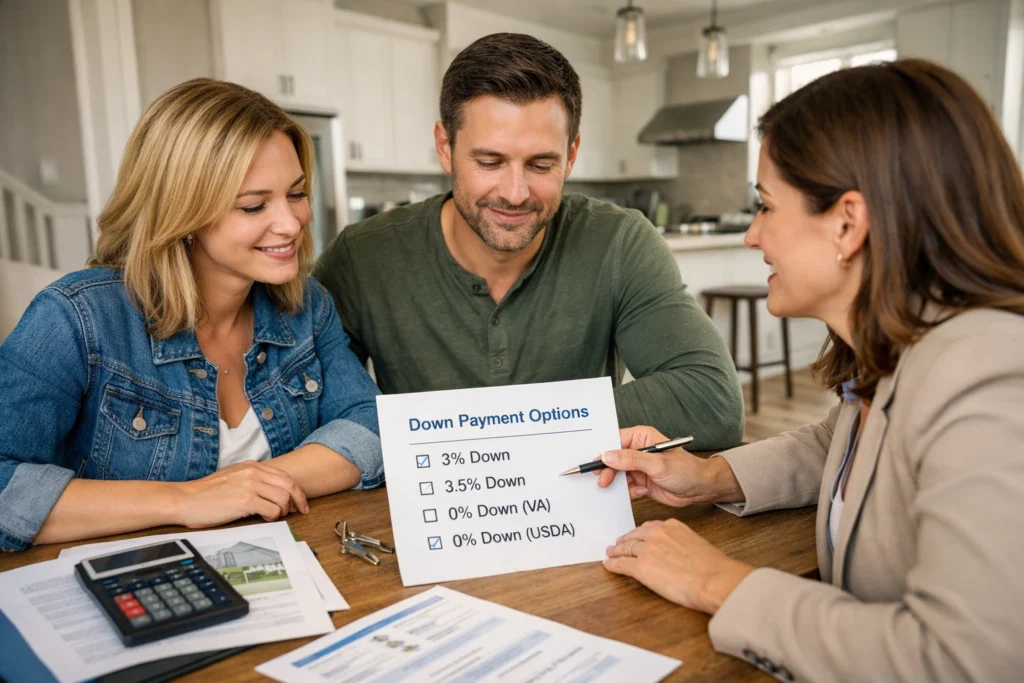
The answer depends on the loan type, your qualifications, and the home you are buying. The good news is that 20% down is not required in many cases. Some buyers may qualify for 3% down conventional options, 3.5% down FHA financing, or even 0% down VA or USDA loans if they meet the program requirements.
That said, the down payment is only part of the picture. New construction buyers also need to think about earnest money, closing costs, upgrades, inspections, moving expenses, and reserves after closing.
The short answer
For many new construction buyers, possible down payment ranges may look something like this:
- 3% down with some conventional loan programs for qualified buyers.
- 3.5% down with FHA for many qualified borrowers.
- 0% down with eligible VA loans in many cases.
- 0% down with eligible USDA loans in qualifying areas.
- 5% to 20%+ down is also common depending on the loan, the buyer’s financial profile, and the goals for monthly payment and mortgage insurance. This is an inference based on the official low-down-payment minimums above and standard mortgage structuring.
Do you need 20% down on new construction?
No. Many buyers do not put 20% down on a new construction home.
A 20% down payment can help you avoid private mortgage insurance on many conventional loans, but it is not the minimum required to buy. Fannie Mae’s HomeReady and Freddie Mac’s Home Possible programs both advertise 3% down payment options for qualified borrowers.
That matters because many buyers shopping new construction are trying to balance several competing goals at once:
- keeping monthly payments manageable
- preserving savings after closing
- leaving room in the budget for upgrades, furniture, blinds, appliances, or landscaping
- avoiding becoming “house poor” right after move-in
For some buyers, putting less down and keeping more cash on hand makes more sense than stretching to reach 20%.
Common down payment options for new construction
1. Conventional loans: sometimes as low as 3% down
Qualified buyers may be able to buy with a 3% down conventional mortgage through programs such as HomeReady or Home Possible. Fannie Mae says HomeReady offers down payments as low as 3%, and Freddie Mac says the same for Home Possible.
These options can be attractive for buyers who want a lower down payment while still using conventional financing. They may also allow flexible sources of funds for down payment and closing costs, including gifts and certain assistance sources.
Smart Planning Tip
A lower down payment can help you get into a home sooner, but make sure you are also leaving enough room for closing costs, moving expenses, blinds, appliances, and post-closing reserves.
2. FHA loans: 3.5% down for many buyers
HUD says FHA financing can allow a down payment as low as 3.5% of the purchase price.
FHA can be a strong option for buyers who want a lower upfront requirement and more flexible qualification standards than some conventional paths. But buyers should still compare the total loan structure carefully, including mortgage insurance and monthly payment over time. The CFPB advises buyers to compare official loan offers and choose the option that fits their needs.
3. VA loans: 0% down for eligible buyers
VA says eligible buyers can often use a purchase loan with no down payment, as long as the sales price is not higher than the appraised value and other requirements are met. VA also notes that the program generally does not require monthly mortgage insurance.
For eligible veterans, active-duty service members, and certain surviving spouses, this can be one of the strongest financing options available.
4. USDA loans: 0% down in eligible areas
USDA Rural Development says its Single Family Housing Guaranteed Loan Program offers 100% loans, meaning no down payment for eligible borrowers in qualifying areas.
This can matter more than some buyers realize around the Charlotte region, because certain outlying communities may still qualify depending on location and household income. USDA’s eligibility tools make clear that both property eligibility and income rules apply.
The down payment is not the only money you need
This is where many buyers get surprised. Even if your down payment is relatively low, you may still need cash for several other items.
Earnest money
Builders often require earnest money deposits, and in some cases those deposits can be higher than what buyers are used to seeing on resale homes. The amount can vary by builder, community, and whether you are buying a quick move-in home or building from the ground up.
Closing costs
Your down payment is separate from your closing costs. The CFPB’s home loan toolkit explains that buyers also need to prepare for closing costs and compare official loan offers carefully.
Upgrades and design center selections
If you are building from scratch, some upgrades may require additional upfront money or affect how much cash you want available before closing. That is one reason some buyers intentionally choose not to put every available dollar into the down payment.
Inspections, moving, and setup costs
Even with new construction, many buyers still budget for inspections, movers, window treatments, appliances, security systems, landscaping, and furniture.
Watch Out
Many buyers focus so hard on the down payment that they forget to budget for the rest of the move. New construction can come with added costs like blinds, refrigerators, washer and dryer, and backyard improvements that are not always included.
How much should you put down if you can afford more?
Just because you can put more down does not always mean you should.
A larger down payment may help you:
- reduce your loan amount
- lower your monthly payment
- potentially avoid PMI on some conventional loans
- strengthen your comfort level with monthly housing costs
But a smaller down payment may help you:
- keep more emergency savings
- hold cash for upgrades and move-in costs
- avoid draining reserves too early
- preserve flexibility if rates or life plans change
The right answer depends on your budget, payment comfort, emergency savings, and how the builder’s incentives and lender terms are structured.
Questions to ask before deciding on your down payment
Questions to Ask Before You Decide
- What is the minimum down payment for the loan I am considering?
- How does my down payment affect my monthly payment?
- Will I have mortgage insurance, and for how long?
- How much cash will I need in addition to the down payment?
- Should I keep more money available for closing costs, upgrades, and reserves?
- Does a builder incentive make one loan option more attractive than another?
New construction buyers should compare the whole deal
On a new construction home, your down payment should not be looked at in isolation.
You also want to compare:
- builder incentives
- preferred lender offers
- closing cost credits
- mortgage insurance
- interest rate and points
- upgrade costs
- total monthly payment
- cash left after closing
The CFPB recommends comparing official loan offers before choosing a mortgage.
Down Payment vs. Builder Deposit
Down payment: The portion of the purchase price you pay based on your loan structure.
Builder deposit: Upfront money often due when you sign the builder contract.
Learn more here: Builder Deposits Explained: What Happens If You Walk Away?
How a buyer’s agent can help
A buyer’s agent can help you look beyond the headline number and compare the full structure of the deal. That includes understanding whether a lower down payment makes sense for your budget, how a builder’s preferred lender incentive changes the math, and whether keeping more cash available for upgrades or closing costs may be smarter than putting every extra dollar into the loan upfront. Since the builder’s on-site team works for the builder, having your own representation can help you evaluate the big picture more confidently.
Need Help Comparing New Construction Costs?
The down payment is only one piece of the puzzle. We can help you compare builder incentives, lender options, monthly payment scenarios, and new construction communities across the Charlotte area.
You can also browse new construction communities, explore Charlotte-area builders, or read Should You Use an Agent for New Construction?.
The bottom line
You may not need nearly as much down as you think to buy a new construction home. Depending on your loan type and qualifications, you may be able to buy with 3% down, 3.5% down, or even 0% down in some cases.
But the smarter question is not just, “What is the minimum?” It is, “What amount makes the most sense for my total financial picture?”
For Charlotte-area buyers, that means balancing down payment, monthly payment, builder incentives, closing costs, and move-in expenses together, not one at a time.
If you are comparing new construction communities and want help thinking through financing, builder incentives, and overall affordability, HomeBuildersCLT.com can help you take the next step.
Sources
Stay Updated and Get Expert Help With Your New Home Search
Sign up to receive updates on Charlotte-area communities, builders, and market trends, and let us know if you’d like to be contacted by a real estate professional for personalized guidance.