
Choosing a builder is one of the most important parts of buying a new construction home. The floor plan, model home, and community amenities may get the most attention, but the builder behind the project matters just as much. NAHB advises buyers to shop for a builder as carefully as they shop for the home itself, and points to basics like clear contracts, insurance, warranties, references, and a well-explained construction process as signs of a reputable business.
That is why builder red flags matter. The goal is not to assume the worst. It is to spot issues early enough to ask better questions, avoid expensive surprises, and make a more informed decision before you sign anything.
Why buyers should pay attention early
Some builder problems show up long before construction is complete. Weak communication, vague pricing, verbal promises that never make it into writing, unclear warranty answers, or pressure to move quickly can all signal trouble before the first closing document is signed. NAHB recommends checking a builder’s reputation, talking to previous buyers, and understanding the contract and building process up front. The FTC also advises consumers to verify licenses and insurance, look for complaint history, and get everything in writing.
A strong builder relationship does not require perfection. It does require professionalism, transparency, and a process that makes buyers feel more informed instead of more confused.
Builder red flags to watch for
1. Vague or incomplete pricing
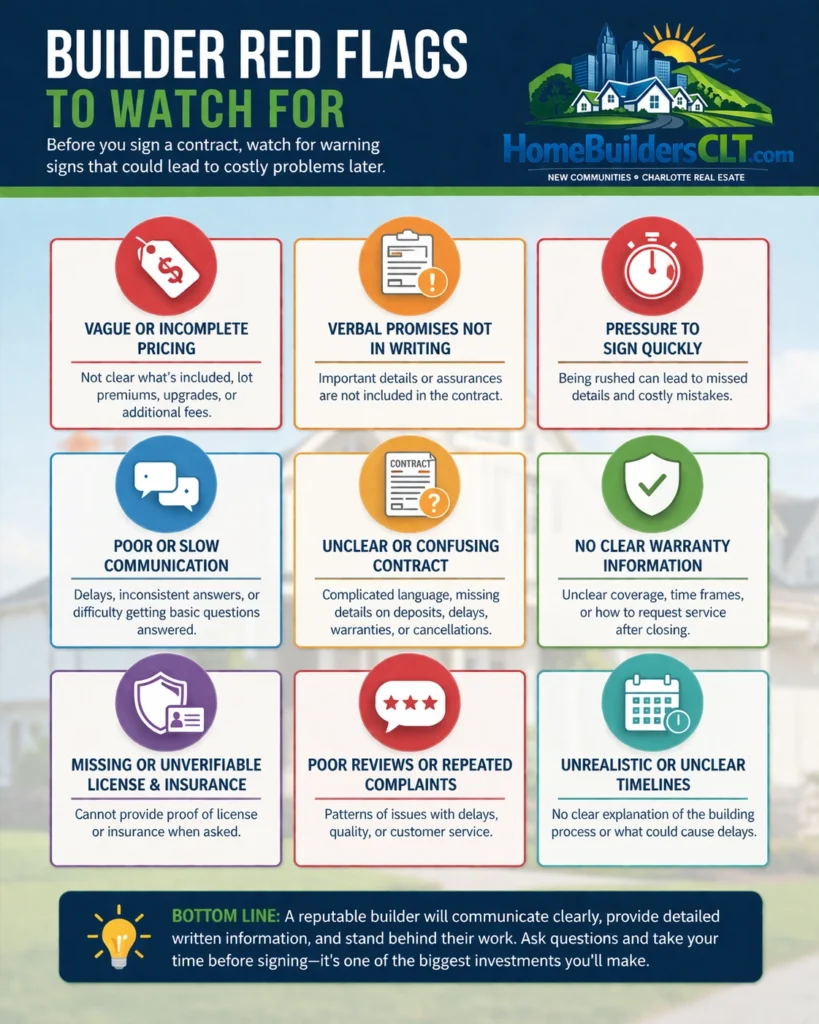
One of the biggest warning signs is pricing that sounds simple at first but becomes less clear the deeper you go. If the base price is emphasized but lot premiums, design upgrades, allowances, site costs, or other fees are hard to pin down, slow down and ask for specifics. A reputable builder should be able to explain what is standard, what costs extra, and when additional charges may apply. NAHB specifically highlights clear contracts and best practices as part of a professional home builder’s operation.
Red flag examples:
- model-home features presented like they are standard when they are not
- unclear lot premium or site-cost explanations
- vague language around allowances or upgrade pricing
- reluctance to provide itemized details in writing
2. Verbal promises that are not in the contract
If a sales representative says, “Don’t worry, we’ll take care of that,” but it never shows up in writing, treat that as a warning sign. The FTC’s consumer guidance emphasizes the importance of written contracts that spell out key terms, promises, and payment expectations. HUD’s new-construction forms also reflect how much formal documentation matters in builder transactions.
If something matters to you, it should be documented clearly.
3. Pressure to sign quickly
Excitement can make buyers move fast, especially when a community is selling quickly or incentives feel time-sensitive. But pressure to sign before you understand the contract, pricing, timeline, or upgrade structure is a red flag. A professional builder should be able to answer reasonable questions without making a buyer feel rushed into a major financial decision. This is an inference based on NAHB’s guidance to investigate the builder carefully and the FTC’s emphasis on reviewing credentials and written terms before paying.
4. Poor communication early in the process
If communication is already slow, inconsistent, or evasive before you sign, that may not improve later. Builders do not need to be perfect, but they should be able to explain the process, next steps, basic timelines, and what is included. NAHB says professional builders explain the construction process and schedule to the buyer.
Warning signs include:
- long delays in getting basic answers
- inconsistent answers from different people
- difficulty getting updated pricing or documentation
- refusal to explain next steps clearly
5. No clear contract or confusing contract language
A vague contract is a major concern. The FTC advises consumers to get contract terms in writing, and NAHB points to clear contracts as a hallmark of a reputable builder. If contract language around deposits, delays, substitutions, warranties, or cancellation rights feels unclear, buyers should slow down and ask for clarification before signing.
That does not necessarily mean the builder is acting improperly. It does mean the buyer should not move forward until the terms are understood.
6. Weak warranty answers
Most newly built homes come with some kind of builder warranty, but the details matter. If the builder cannot clearly explain what is covered, for how long, how claims are submitted, and what happens after closing, that is a red flag. HUD’s Warranty of Completion of Construction form underscores the importance of formal warranty documentation in certain FHA-insured transactions. HUD also provides a complaint form related to defects in newly constructed property, which reflects how significant post-closing quality issues can be.
Questions buyers should be able to get answered:
- What is covered in year one?
- Are systems and structural items treated differently?
- How do warranty requests get submitted?
- What happens with punch-list items before closing?
7. Missing or unverifiable license and insurance information
The FTC specifically advises consumers to consider only contractors who are licensed and insured, to confirm license status with the appropriate government authority, and to ask for proof of insurance. If a builder or contractor cannot provide that information, or resists sharing it, that is a serious warning sign.
Even in a large community setting, buyers should feel comfortable verifying the basics.
8. Complaint patterns or poor references
No builder will have a perfect record, but repeated complaints about the same issue deserve attention. NAHB recommends asking for references and checking past work. The FTC advises checking with consumer protection officials, searching for complaints, and looking into the company’s reputation.
What to watch for:
- repeated complaints about delays with no communication
- repeated warranty-service complaints
- multiple reviews describing surprise costs
- unresolved customer-service issues that follow the builder across communities
9. Unclear construction timeline expectations
Construction timelines can shift, and that alone is not a red flag. The red flag is when the builder will not explain how timing works, what could cause delays, or how the buyer will be updated. A professional builder should be able to explain the construction process and schedule, even if the dates are not guaranteed.
Buyers should understand whether completion dates are estimated, what delays are allowed, and what happens if timing affects financing, move-out plans, or rate locks.
10. Too many substitutions with too little transparency
Supply availability can change, so substitutions are not automatically a problem. The issue is whether the builder is transparent about how substitutions are handled. If the contract gives broad substitution power with little explanation, or if buyers cannot get clear answers about what “comparable” means, ask more questions before signing. This is an inference grounded in the general importance of written contract clarity highlighted by NAHB and the FTC.
11. Confusing deposit rules
Deposits are one of the biggest financial-risk areas in builder contracts. Buyers should understand how much is due, when it becomes nonrefundable, and whether upgrade money is treated differently from earnest money. If that answer is hard to get in plain language, that is a red flag. FTC guidance stresses that contracts should clearly state payment schedules and obligations.
12. Resistance to outside review or independent advice
If a builder or sales team discourages buyers from having an attorney review the contract, asking detailed questions, or working with their own representation, that should raise concern. A major purchase should allow room for buyers to understand what they are agreeing to. This is an inference based on the broader consumer-protection principles in FTC guidance and on the importance of documentation and review in HUD and NAHB materials.
Red flags during the walkthrough and finish stage
Some concerns show up later, closer to closing.
Examples include:
- rushed walkthroughs
- visible unfinished items being minimized without documentation
- pressure to close before major issues are addressed
- unclear process for punch-list repairs
- weak explanations of post-closing service procedures
HUD’s complaint form for newly constructed property and its warranty framework both reinforce the importance of documenting defects and understanding the post-closing responsibility structure.
What buyers should do if they notice red flags
Red flags do not always mean you need to walk away immediately. They do mean you should slow down and verify more.
Good next steps:
- ask for the answer in writing
- request proof of insurance and licensing
- ask for references from recent buyers
- review complaint patterns
- have the contract reviewed before signing
- compare the same answers across multiple builders
NAHB recommends checking references and reputation, while the FTC recommends verifying credentials and searching for complaint history before paying.
Why buyer representation can help
Builder sales teams work for the builder. That does not mean they are not helpful, but it does mean buyers benefit from having someone focused on their side of the transaction. A buyer’s agent can help compare communities, flag contract questions, identify missing details, and help buyers stay focused on what matters most before signing.
Through HomeBuildersCLT.com, buyers can explore Charlotte-area builders and communities, compare options, and reach out for local guidance before making a major decision.
Explore Communities, Compare Builders, and Get Local Guidance
Browse new construction communities, compare Charlotte-area builders, explore helpful guides, and reach out for local help with your home search.
Final thoughts
Most buyers hope red flags will be obvious, but many are subtle at first. Vague pricing, weak documentation, poor communication, unclear warranty answers, missing insurance details, and complaint patterns can all point to bigger problems later if they are ignored. NAHB’s consumer guidance and FTC consumer-protection advice both point in the same direction: verify the builder, understand the paperwork, and get key promises in writing.
Asking smart questions does not make you difficult. It helps you choose a builder more confidently and avoid preventable surprises.
This article is for general information and is not legal advice.
New Construction Guides
- Questions to Ask Before Signing a Builder Contract
- Should You Use an Agent for New Construction?
- Do Builders Pay Buyer Real Estate Agents?
- Browse Builders
- Browse Communities
Sources
- National Association of Home Builders — How to Choose a Home Builder According to the Experts
- Federal Trade Commission — How To Avoid a Home Improvement Scam
- HUD — Warranty of Completion of Construction
- HUD — Construction Complaint for New Constructed Property
- HUD — Builder’s Certification
Stay Updated and Get Expert Help With Your New Home Search
Sign up to receive updates on Charlotte-area communities, builders, and market trends, and let us know if you’d like to be contacted by a real estate professional for personalized guidance.